
Me, Myself, and AI: A Look Into Parasociality With Chatbots
Written by José-Matéo Hozjan-Guerra for Cheryl Simon’s Communication Theory course. Movies such as Ex Machina and The Terminator offer us a glimpse into the possibility of future advancements in technology and artificial intelligence. While we deny the plausibility of a cyborg assassin sent to kill us someday in the future, these human-like representations of artificially…

Biting Back at Abusers: Reclaiming Women’s Agency in Ana Lily Amirpour’s A Girl Walks Home Alone At Night
Written by Audrey Anne Le Nabec for Justine McLellan’s Cinema and Culture course. Long-existent before the creation of the film, the socio-cultural phenomenon of the repression of women’s autonomy and freedom concerning sexual violence has been present across cultures and nations. It is with the rise of feminist movements like ‘women, life, freedom’ (Iran) and…

Biting the Hand that Feeds You: Navigating Film Censorship in Communist Poland
Written by Philippe Cliche for Magdalena Olszanowski’s Alternative Cinema course. It had been a long time since you had watched a movie. A real one at least. There had certainly been ‘cinematic works’ shown in theaters throughout the last few years, but they were all nauseating with how much they rave about the state. This…
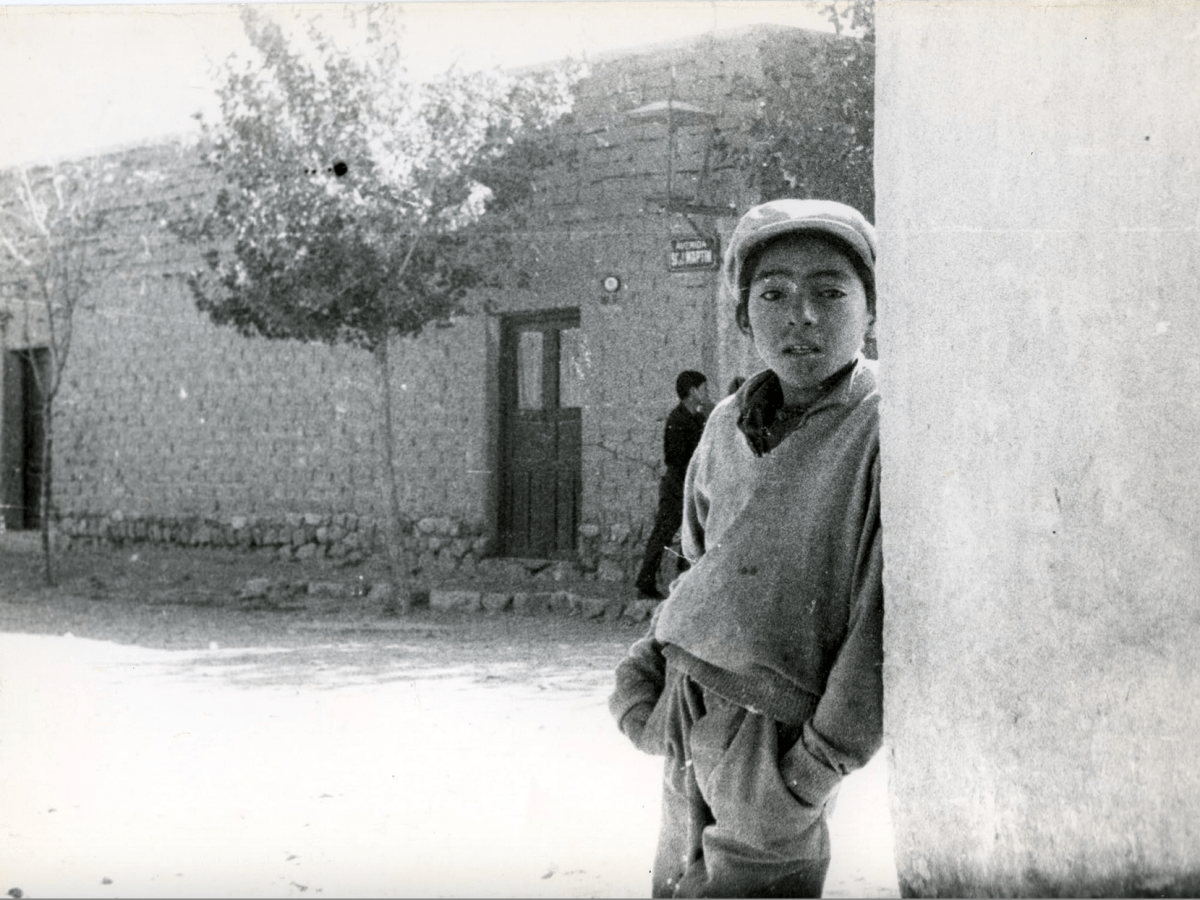
Lenses of Freedom: An Exploration of Third Cinema as a Redefinition of Film
Written by Suchitra Marti for Michael Filtz’s Explorations in Cinema & Communications course. In examining the collective, the artist’s role significantly impacts how we view our reality, a fact long used by vanguards to inspire revolutionary thought. As filmmaking became particularly accessible, this form has transformed into a powerful tool of resistance. As imperial exploitation…

The Devil in Disguise: Feminism through the Male Gaze in Rosemary’s Baby
Written by Shira Goren for Cheryl Simon’s Film Theory course. TW: mention of r*pe. Rosemary’s Baby, directed by Roman Polanski in 1968, is a psychological horror movie that discusses themes such as paranoia, satanism, and women’s liberation. It deals with the story of a young woman named Rosemary who moves to New York with her…

Reflections of the Self: Nature, Identity, and Coming of Age in Barry Jenkins’ Moonlight
Written by Spencer Stutman for Robin E. Feenstra’s Coming of Age Fiction course Nature, in many ways, can be the strongest reflection of self throughout one’s life. Through the trauma, the joys, the lessons, and the often-unexplainable grief of childhood, it is the natural world which surrounds us that continues to raise us, even if…

Category III Cinema: About Hong Kong’s Exploitation Cinema
Written by Mikaël Bédard for Cheryl Simon’s Film Theory course. In the 1996 film Viva Erotica, an out-of-work film director agrees to make a Category III/soft-core porno to make ends meet. He is asked to be more “Wong Jing than Wong Kar-wai”; in other words, he is asked to compromise his artistic integrity to make…

Disinformation, Scapegoating, and the Weaponization of Fear : Mechanics of Propaganda in Harry Potter, Nazi Germany, and the Trump Era
Written by Neyla El-Euch for Lex Milton’s Explorations in Cinema and Communications course. The desire to convince others of one’s opinions has been an integral part of human communication across time. However, this has resulted in the dissemination of propaganda: the spreading of biased and often misleading information promoting particular political agendas and ideological viewpoints…

Metropolis: A Searing Critique of Inequality Through Contrast
Written by Lea Safaryan for Justine McLellan’s Cinema Styles course Metropolis (Lang, 1927) is a Weimar-era sci-fi film that explores themes of class disparity and industrialization. Through the use of contrast within the mise-en-scène, elements such as the aristocratic costuming, the theatrical acting, and the hyper-industrialized megacity come together to compound on those central themes.…

Parasite and The Menu on Anti-Capitalism
Written by Lily Greenspoon and Gabriella Kouri for Magdalena Olszanowski’s Cinema Styles course Described as “eat the rich movies,” Bong Joon-ho’s 2019 film Parasite and Mark Mylod’s 2022 film The Menu have been praised for their commentary on class consciousness: exploring anti-capitalism, and highlighting the inequalities that exist between classes, along with the problems that arise…

Reconstructing Memories: Intimacy and Silence in Aftersun
Written by Élise Léger for Justine McLellan’s Cinema Styles course Aftersun (2022) is a film acting as intimate memories reminisced by daughter Sophie (Frankie Corio) about a vacation spent with her father (Paul Mescal) in the 1990s. Directed by Charlotte Wells, the film deals with themes of depression, connection, and detachment. These themes are well…

Anthropocentrism in Grizzly Man and La Pieuvre
Written by Dorothée Gingras-Bernardin for Magdalena Olszanowski’s Cinema and Communications: Selected Topics course Winner of the Cheryl Simon Writing Award for Subtext’s Fall 2024 issue Is it possible to perceive nature without projecting human values onto it? How can cinema reinforce our anthropocentric mentality or, on the contrary, contribute to a reconceptualization of nature and…
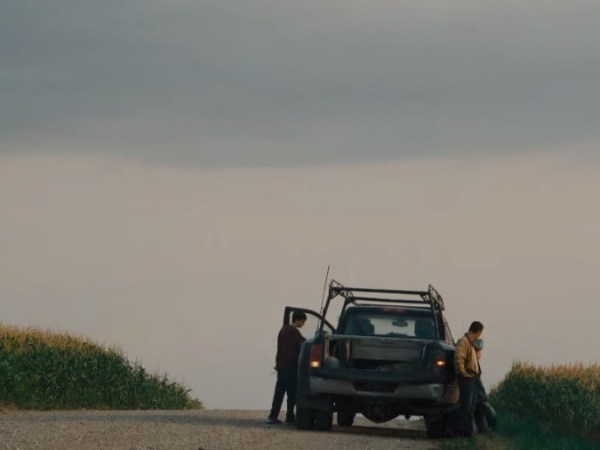
Interstellar & Greenland: Beyond Human Nature
Written by Aylu Girard for Magdalena Olszanowski’s Cinema and Communications: Selected Topics course “We used to look up at the sky and wonder about our place in the stars. Now we just look down and worry about our place in the dirt.” – Interstellar Interstellar directed by Christopher Nolan (2014) and Greenland directed by Ric…

Denis Villeneuve’s Memorial: Honoring or Deceiving?
Written by Aïyana Faye-Giard for Kim Simard’s … class At the end of the 20th century, just as the world was slowly recovering from two World Wars, a violent tragedy shook the province of Quebec. On December 6, 1989, fourteen women were brutally murdered on the Polytechnique campus, in response to a young man’s anti-feminist…

Love Without Borders: The Parental Relationship Between Theodore and Samantha in Spike Jonze’s Her
Written by Elliot King for Justine McLellan’s Cinema Styles course Spike Jonze’s Her (2014) is set in a futuristic world where technology has been fully integrated into everyday life, even more than today. This is clear when the protagonist Theodore (Joaquin Phoenix) falls in love with an operating system named Samantha (Scarlett Johansson). Regardless of…

Cinematic Transformations: Exploring the Evolution of Violence in Film Narratives
Written by Eva Sivilla and Noa Druker for Michael Filtz’s Cinema Styles course In its primitive form, the use of violence in cinema ranged from portraying moral consciousness to simply serving as a form of entertainment. Yet, through the evolution of characterization, the advancement of modern-day cinematography, and a societal desensitization to violence, Hollywood and the film…

Do the Right Thing Love/Hate Scene Analysis
By Imogen Prince, written for Kim Simard’s Explorations in Cinema and Communications class Winner of the Cheryl Simon Writing Award for Subtext’s Winter 2024 issue Spike Lee’s Do the Right Thing (1989) takes place in the span of one day in a predominantly Black New York neighborhood during a heatwave. The film centers on a…

An Analysis of Midsommar: Burning Men and May Queens
Written by Michaela Charbonneau for Dr. Magdalena Olszanowski Cinema & Communications: Selected Topics course *This text contains spoilers to the film Midsommar The night-winds come and go, mother, upon the meadow-grass. And the happy stars above them seem to brighten as they pass; There will not be a drop of rain the whole of the…

Toxic Masculinity & Moose Hunting in Pierre Perrault’s The Shimmering Beast
Written by Markus Falk and Juniper McKenzie for Justine McLellan’s Cinema and Culture course The film La Bête Lumineuse (Pierre Perrault, 1982) centers around a group of middle-aged men who go on a hunting trip in search of moose. During this trip, the social dynamics of the group, compared to that of a wolfpack, gets…

Shifting Identities
A scene analysis from Robert Altman’s 3 Women Written by Kayliya Phongsavath Sananikone for Justine McLellan’s Cinema Styles course 3 Women (1977), directed by Robert Altman, is a fever dream of a film that follows the otherwise mundane lives of Millie, Pinky, and Willie. The film focuses on their identities and how those are shaped…

Women’s Self-Determination
A comparative analysis of Miriam Toews’ Women Talking and Greta Gerwig’s Little Women By Kara Chevry, written for Louise Slater’s Women and Anger course For four years, several women and girls within a remote Mennonite colony have woken up in pain and agony, their skin marked with bruises and cuts. The colony’s religious leaders laid…
 SUBTEXT JOURNAL