Written by Lea Safaryan for Justine McLellan’s Cinema Styles course
Metropolis (Lang, 1927) is a Weimar-era sci-fi film that explores themes of class disparity and industrialization. Through the use of contrast within the mise-en-scène, elements such as the aristocratic costuming, the theatrical acting, and the hyper-industrialized megacity come together to compound on those central themes. Demonstrating that inequality and injustice are detrimental to all, even those seemingly unaffected by it, the film offers an insightful critique still as relevant today as it was in the 1920s.
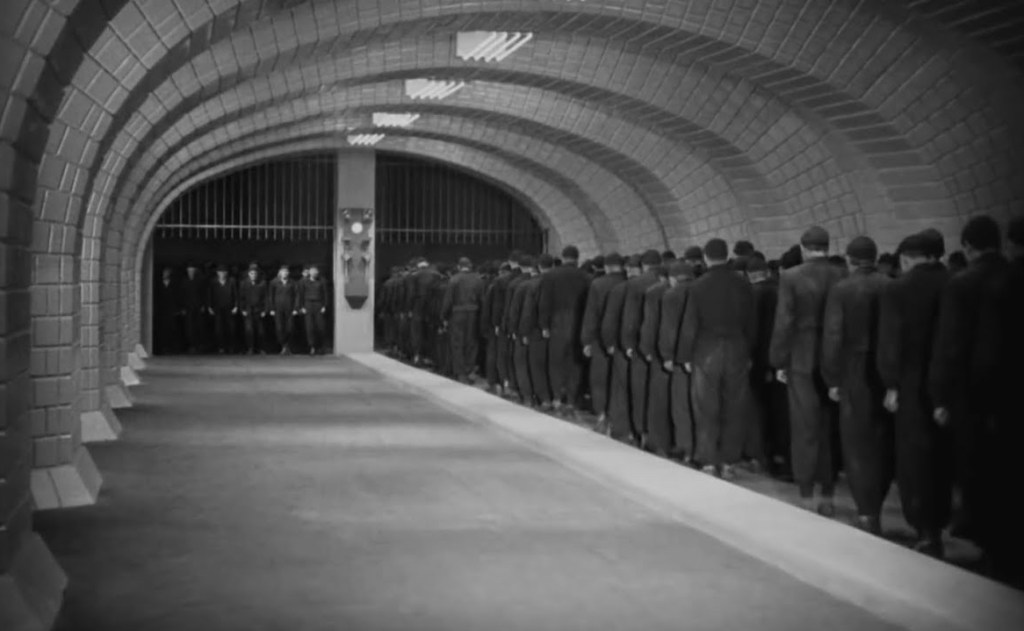
From the very first scenes, the stark difference in costuming between the workers and the ruling class creates a visual separation which lingers throughout the film, a reminder of the scale of schism in the city of Metropolis. Underground, people march to work in identical black coats and hats. Their individuality is nonexistent and, as the drabness of their clothing overwhelms the scenes, it becomes easier to think of them as a swarm; cold and soulless, much like the machines they operate. By contrast, the characters above dress in the exact opposite way; in the Eternal Garden, women wear extravagant, sparkling costumes and head pieces that look straight out of an avant-garde fashion show. Freder, the main character, wears an all-white outfit consisting of a blouse, a tie, puffed trousers and knee-high socks. Reminiscent of French aristocracy in its sheer excess, these consumes not only contrast with the workers’ attire, but place the characters within a setting that is uniquely theirs: the sparkling beauty of the fountain and the fountain itself become indistinguishable. As noted by David Bordwell and Kristin Thompson in their book Film Art, “there is a bleeding of the costume into the setting,” which furthermore anchors the characters into their assigned spaces and, by extension, enforces the hierarchy the city is built upon (Bordwell and Thompson). In sum, the difference between the dull, uniform costuming of the workers and the grand, extravagant costuming of the ruling class not only contrasts their positions, but, through the blurring of the border between costume and setting, also demonstrates the extent to which the characters are stuck in these positions.
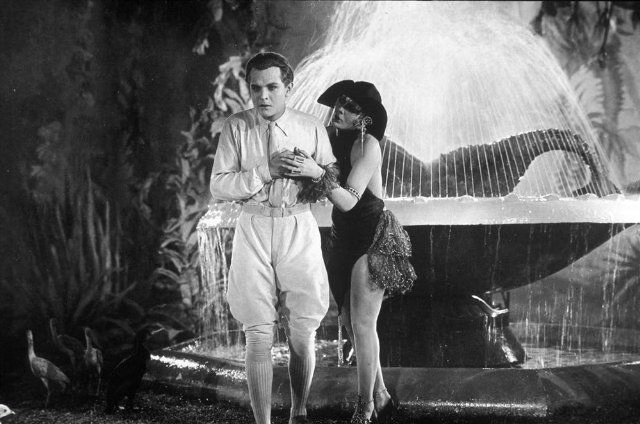
In addition to costuming, theatrical acting is used to physically separate the two classes;the ones who have freedom and ones who do not. The workers march off to work with their heads bowed, in sync like a hivemind. They move less freely, seemingly stuck within their respective shots. In the underground factories, restriction of movement is a “nightmarish projection of humanity forced to operate as machines” (Quinn). Conversely, above ground, people move more freely and the camera itself adjusts to give them more room, unlike the overcrowding of underground scenes. Freder smiles, frowns, clutches his heart in shock or sadness, all physical displays of his humanity and individuality, something the workers are deprived of. As such, this contrast between the degree of freedom of movement as well as between the scale of shots serves as a humanizing force, separating those who are truly seen as people and the labourers.
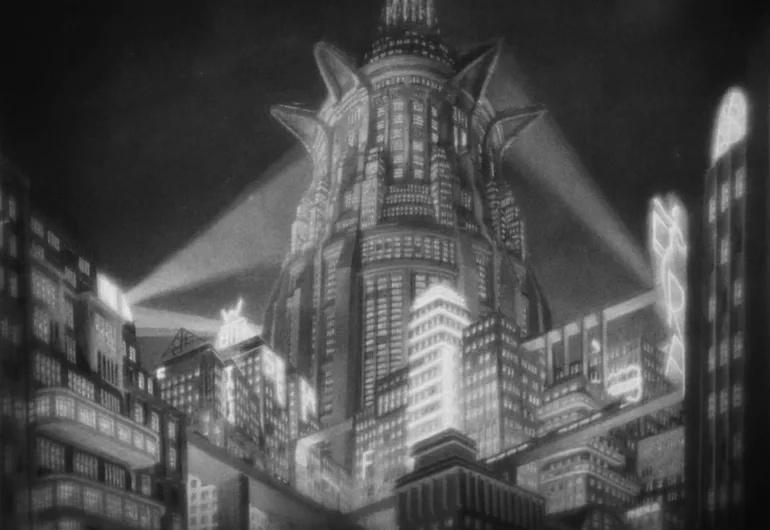
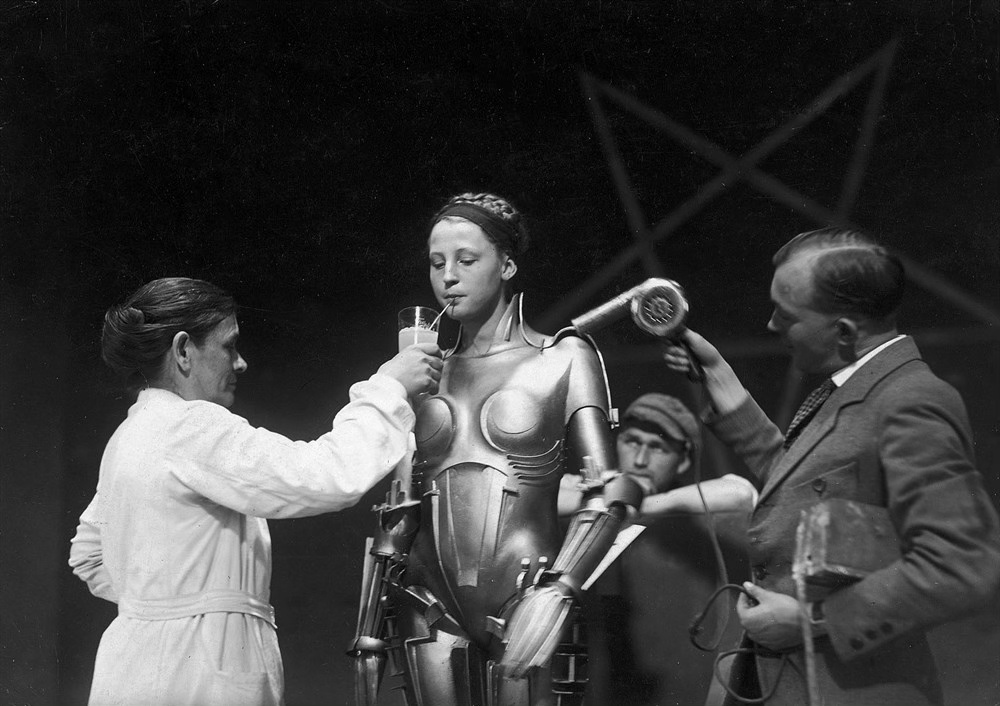
The set design is used to convey feelings of oppression and grandeur, contrast to the elaboration of the undercity and the city respectively. Underground, “no daylight, no sun creates a loss of individuality and interchangeability [as] viewers can only see the dreary uniformity of the exterior” (Kuhn̈e, 2020). In a way, restricting the audience from the private spaces of the workers is yet another way of dehumanizing them, reducing these individuals to the work they do. Contrary to the claustrophobic restriction of the undercity, the overcity is grand, ambitious, a true Metropolis on all accounts. The “monstrous scale of [these] sets” (Quinn, 2010) is a reflection, representative of the people who built the city. The New Tower of Babel, for example, where the founders of the city look down upon its inhabitants, is an obvious show of hubris, an arrogant ambition which may lead to great disaster, not unlike the Biblical tower of Babel’s monumental collapse. Though similarly overwhelming, the difference between the grimy, suffocating undercity and the towering, mesmerizing cityscape of Metropolis serves to further the contrast between characters by placing them in distinct environments.
To conclude, Metropolis contrasts bland and extravagant costumes, restriction and freedom of movement, and claustrophobic and grand sets in order to provide a criticism of class disparity. Through the disturbing separations it creates by contrasting these elements, the film delivers a timeless message: the burden of inequality in society is carried by all, and all would benefit from it being eradicated.
Works Cited
Bordwell, David, and Kristin Thompson. Film Art. 1979.
Lang, Fritz, director. Metropolis. UFA, 1927.
Quinn, Anthony. “Metropolis.” The Independent, 10 Sept. 2010, www.independent.co.uk/arts-entertainment/films/reviews/metropolis-pg-2075116.html.

