Category: Ecocinema
-

Anthropocentrism in Grizzly Man and La Pieuvre
Written by Dorothée Gingras-Bernardin for Magdalena Olszanowski’s Cinema and Communications: Selected Topics course Winner of the Cheryl Simon Writing Award for Subtext’s Fall 2024 issue Is it possible to perceive nature without projecting human values onto it? How can cinema reinforce our anthropocentric mentality or, on the contrary, contribute to a reconceptualization of nature and…
-

Interstellar & Greenland: Beyond Human Nature
Written by Aylu Girard for Magdalena Olszanowski’s Cinema and Communications: Selected Topics course “We used to look up at the sky and wonder about our place in the stars. Now we just look down and worry about our place in the dirt.” – Interstellar Interstellar directed by Christopher Nolan (2014) and Greenland directed by Ric…
-
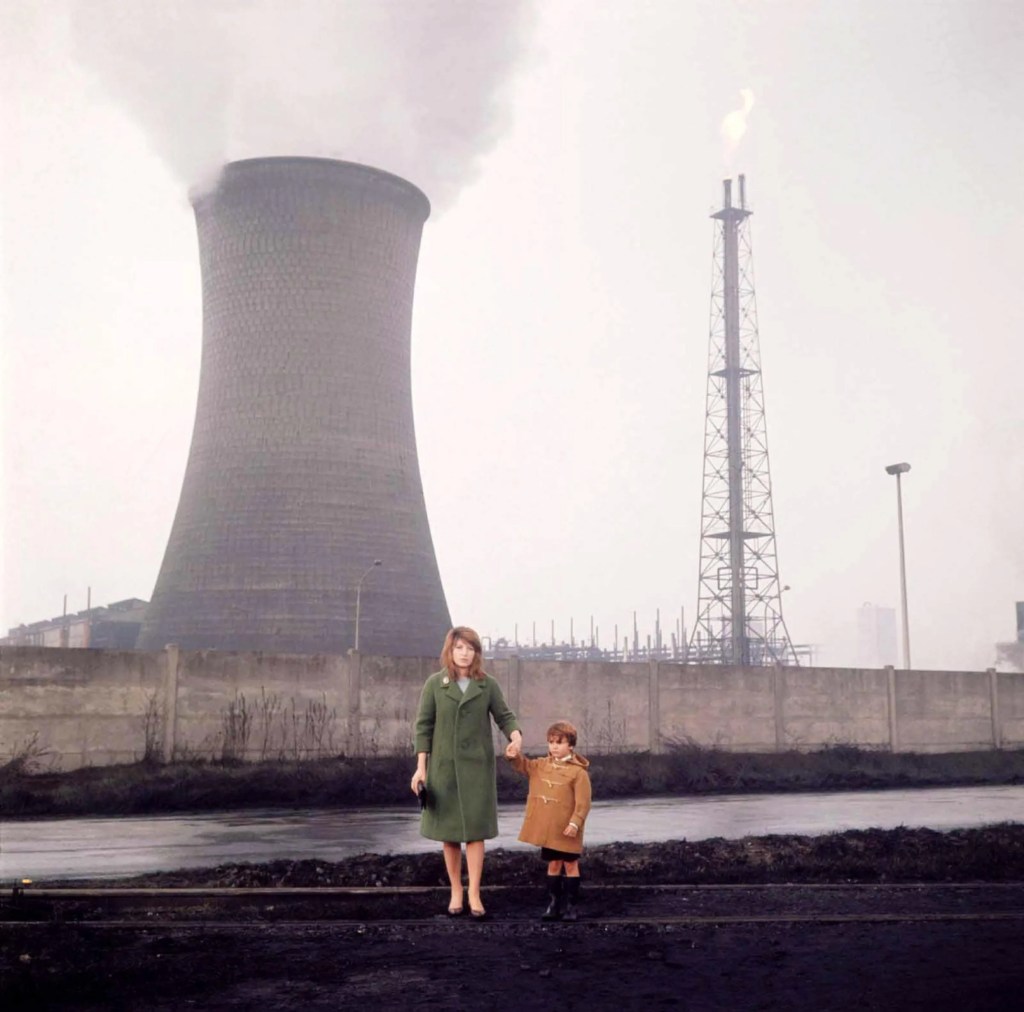
Alienation as a Result of Mass Industrialization in Antonioni’s Red Desert
Written by Dorothée Gingras-B for Magdalena Olszanowski’s Ecocinema course Through grim images of factory chimneys, opaque fumes, and behemoth infrastructure, Michelangelo Antonioni’s 1964 drama Red Desert tells the story of a woman’s growing sense of alienation and disorientation in the face of a highly industrialized and increasingly polluted environment. In the midst of Italy’s booming after-war…
-

The Mesmerizing and Brutal Essence of Nature in Chloe Zhao’s Nomadland
By Angélique Babineau, written for Magdalena Olszanowski’s Ecocinema class Nomadland (2020), set in 2011 Nevada, Arizona, South Dakota, and California, is an independent American drama directed by Chinese filmmaker Chloe Zhao. Adapted from the 2017 novel by Jessica Bruder of the same title, Nomadland mostly features real nomads as fictionalized versions of themselves (Linda May…
 SUBTEXT JOURNAL