Written by Audrey Anne Le Nabec for Justine McLellan’s Cinema and Culture course.
Long-existent before the creation of the film, the socio-cultural phenomenon of the repression of women’s autonomy and freedom concerning sexual violence has been present across cultures and nations. It is with the rise of feminist movements like ‘women, life, freedom’ (Iran) and ‘#metoo’ (United States) that the global threat of sexual violence against women is more evident than ever. The threat of gender-based sexual violence haunts countless women in their everyday lives which forces them to adapt their behaviours, especially while they are alone at night. Elise Godfryd explains in the Michigan Daily that women, ‘ build [their] days around [their] commutes, making sure that [they] won’t have to walk home, alone, in the dark,’ adding that ‘outside at night is simply not a place where [women] are welcome’ (Godfryd, “Our Culture of Fear”). Women are obligated in the face of such a major threat to always be vigilant and on their guards when outside, and even more so at night. This type of behaviour is necessary for survival and is ingrained in women, starting from girlhood. Irish actress Saoirse Ronan addresses this in an interview saying, ‘This is the mentality that a woman has to have, and that a young girl has to have every day ever’ (Kaplan, “Ronan Addresses Comments”). The fear of sexual violence in women’s lives restricts what they can and cannot do, depriving them of their freedom and autonomy for the sake of their survival. It is in this context that Ana Lily Amirpour writes and directs her film A Girl Walks Home Alone at Night (Amirpour, 2014).
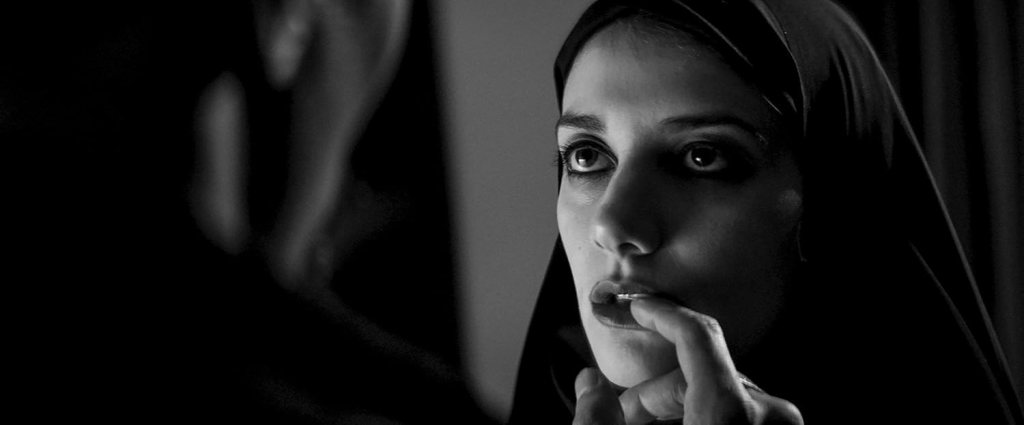
The title of the film A Girl Walks Home Alone at Night directly refers to the socio-cultural context of the threat of sexual violence as a reaction to the repression of women’s autonomy and freedom. The title reflects on the vulnerability women feel when putting themselves in potential danger, already indicating to the spectator the subject matter of the film. It taps into a near universal fear shared by women- the threat of sexual violence. Besides the title, a major theme of the movie is taking back control through the reappropriation of predatory behaviours. The main character of Amirpour’s film, The Girl, reclaims agency for women through her choices of victims. As a vampire, she only targets men who are exploitative or abusive towards women and, in doing so, she disturbs the power dynamics associated with these two sexes, turning her vulnerable appearance into a weapon. She is the ultimate predator in ‘Bad City’ and has an agenda she follows.
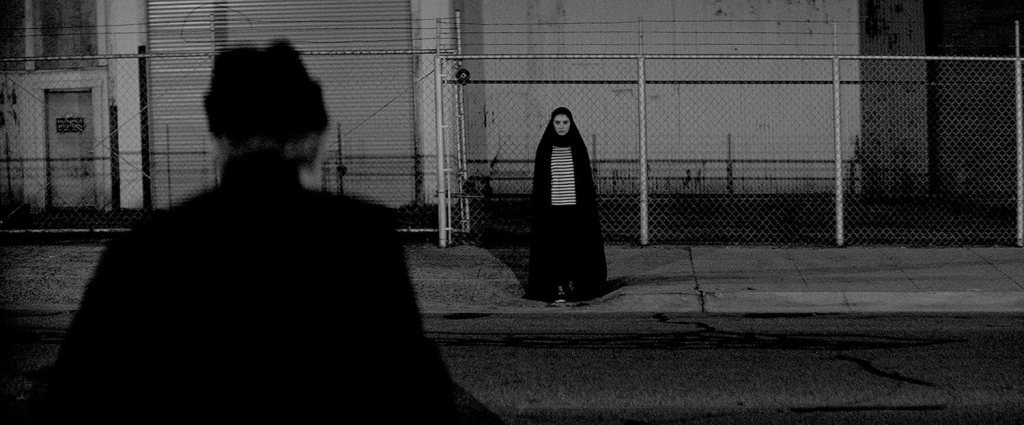
This is noticeably visible through her interaction with Saeed, the city’s pimp and drug dealer. Although he presents himself as a predator with his tiger and cheetah apartment decorations, embroidered tiger jacket, tiger tattoo and deer wall mounts, Saeed is easily seduced by The Girl. She is always the one in control and ultimately kills him by seducing him. Doro Weise indicates in the Journal of Literature, Culture and Literary Translation that, ‘Saeed’s sexual coercion and exertion of Atti [the sex worker exploited by Saeed] is mirrored in the [apartment] scene in which the vampire takes Saeed’s finger into her mouth as if to perform fellatio on it, only to bite off his finger and subsequently [kill him]’ (Wiese, “Female Desire and Feminist Rage”). The Girl re-appropriates these men’s behaviour to trick and harm them–beating them at their own game. She makes sure that she instills fear in them before killing them, forcing her victims to challenge their perception of women. As Godfryd states in the Michigan Daily, ‘She stalks these men and makes them know how it feels to be a woman at night’ (Godfryd, “Our Culture of Fear”). This is her way of avenging the injustices committed against women by going after and against the oppressive and exploitative perpetrators of gender-based violence.
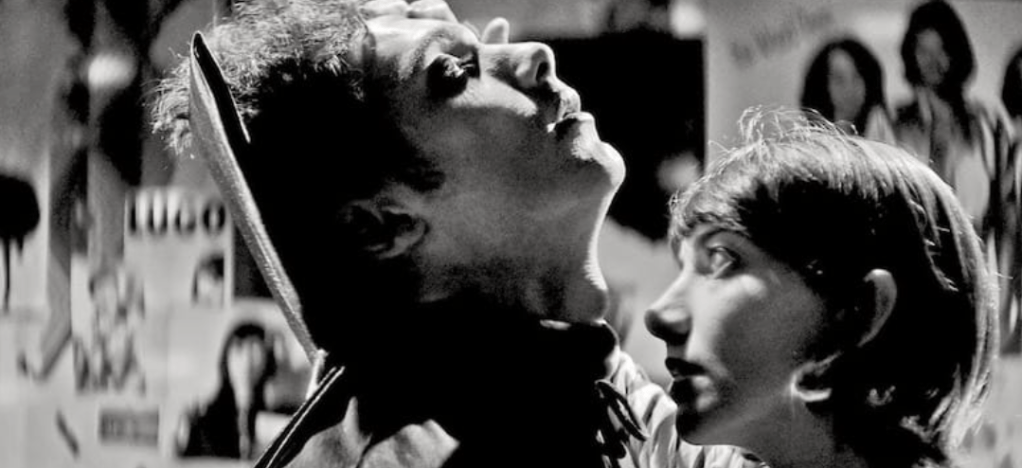
The Girl, by her specific choice of victims, creates a sense of justice for the women of ‘Bad City’ as she embodies feminist revenge. Although not being assaulted herself, ‘The Girl, [shakes a] sense of sadness, desire, and hope for other potentialities[…] which creates an alignment between the vampire and Atti [the sex worker] in their struggle against justice and reduce the harm done against women in ‘Bad City”. She is the vigilante women desperately need in a world so forgiving of men’s violence against women.
WORKS CITED
Godfryd, Elise. “A Girl Walks Home Alone at Night’ and our culture of fear”. The Michigan Daily, 10 Oct. 2019, https://www.michigandaily.com/arts/a-girl-walks-home-alone-at-night-and-our-culture-of-fear
“Iran: Institutional discrimination against women and girls enabled human rights violations and crimes against humanity in the context of recent protests, UN Fact-Finding Mission says”. UNITED NATIONS HUMAN RIGHTS, 8 March 2024, https://www.ohchr.org/en/press-releases/2024/03/iran-institutional-discrimination-against-women-and-girls-enabled-human
Kaplan, Anna. “Saoirse Ronan addresses her now-viral comments on violence against women”.
Today, 7 Nov. 2024, https://www.today.com/popculture/news/saoirse-ronan-viral-comment-graham-norton-show-rcna179120
Saad, Lydia. “Personal Safety Fears at Three-Decade High in U.S.”. GALLUP, 16 Nov. 2023, https://news.gallup.com/poll/544415/personal-safety-fears-three-decade-high.aspx
Wiese, Doro. “Female Desire and Feminist Rage: Ana Lily Amirpour’s Reworking of the Vampire Motif in A Girl Walks Home Alone at Night”. Journal of Literature, Culture and Literary Translation, June 2022, https://www.sic-journal.org/Article/Index/686
“Talking to the Star and Director of ‘A Girl Walks Home Alone at Night’.” YouTube, uploaded by Vice, 11 December 2014, https://www.youtube.com/watch?v=4wlm97DiUq8
 SUBTEXT JOURNAL