
A scene analysis from Robert Altman’s 3 Women
Written by Kayliya Phongsavath Sananikone for Justine McLellan’s Cinema Styles course
3 Women (1977), directed by Robert Altman, is a fever dream of a film that follows the otherwise mundane lives of Millie, Pinky, and Willie. The film focuses on their identities and how those are shaped throughout the film. There is a moment in the film where Pink reads through Millie’s diary, this scene marking a pivotal point where both of the women’s identities and personalities distinctly begin to change. The cinematography, the mise-en-scène, and the dialogue all that work together to make this moment stand out.
The scene starts with brilliant cinematography showing Pinky putting on a yellow nightgown before starting to sew. Pinky takes the key to Millie’s diary and begins to read it, desperately fumbling with the book. Pinky then walks off camera to the nearby desk while the camera lingers on Millie’s bed where Pinky discarded the key. There is a hard cut jumping to Millie returning home and when inside; the camera’s location rarely ever changes from its spot at the end of the bedroom. This could be because Altman wanted to give the impression that the audience is in Pinky’s shoes. We are watching Millie run in and out of the bedroom, which indirectly creates tension since the bedroom is almost ‘contaminated’ with evidence of Pinky’s wrongdoings.

3 Women (Altman, 1977)
Altman makes great use of the mirror to give implicit meaning with its reflection. When Millie confronts Pinky, Pinky is depicted solely through the mirror’s reflection, making her seem smaller than usual. This could reflect Pinky’s thoughts and feelings as she is knowingly doing something immoral. The only time Pinky is seen outside of the mirror is when she is exuding confidence. Only after she grabs the key and asks about the outcome of Millie’s date do we see her directly; when she is no longer at risk of getting caught. This scene is edited with hard cuts, which falls in line with the whiplash of the conversation the girls are having.
After Pinky asks about the date, the camera follows Millie into the bathroom as she disappears, echoing a feeling of emptiness through the remaining negative space. This negative space could reflect the way in which Millie is feeling after being asked something she might not have wanted to disclose. The camera cuts back to Pinky saying that she does not own a swimsuit. Slightly out of the frame Pinky is seen slipping the key into her nightgown, followed by the camera zooming toward her pocket exposing the outline of the key to Millie’s diary. In this sequence, the camera work reflects the girls’ emotions, while displaying the shifting dynamic existing between them.
3 Women (Altman, 1977)
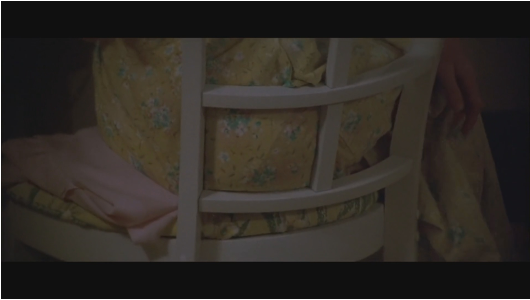
Throughout the film, Pinky is almost always wearing her signature color, pink. This makes her stand out in contrast to Millie’s yellow home, creating the impression she is invading a space where she does not belong. In this scene, Pinky is adorning Millie’s yellow while Millie wears a pink dress. It is almost like Millie is a stranger in her own home, while Pinky fits right in. Pinky is presented as a clueless and frivolous character, the color pink relating to said cluelessness. Thus, Millie’s yellow image color could be attributed to her stability and confidence. In this scene, Millie’s pink dress is a deliberate choice which symbolizes her cluelessness concerning Pinky’s behavior, while Pinky’s yellow dress represents her confidence.


3 Women (Altman, 1977)
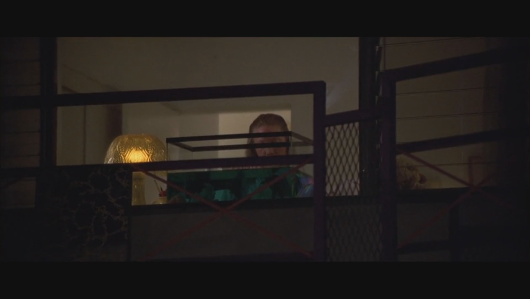
The mise-en-scène goes beyond the color swap, as the lighting starts altering the audience’s impression of Millie. When Millie joins the other tenants outside, she is dimly lit. Even while dressed in her signature bright yellow, she does not stand out, which reflects the other tenants’ lack of care for her. It shows that she does not belong there, as even the lighting is making her blend in the darkness. Bathed in light, Pinky is depicted reading Millie’s diary through a window outside of the pool area. She clearly bears immediate importance in comparison to Millie and the tenants outside. In this scene, the camera is directly invading the privacy of the home through the window, mirroring how Pinky is invading Millie’s privacy by reading her diary.
3 Women (Altman, 1977)
Throughout the film, Millie chases a spotlight that is not hers. At the pool, Millie fades into the background while the tenants are lit by the wall sconces – taking attention away from Millie and directing it towards the tenants. Comparatively, in the shot framing her through the window, Pinky is already in the spotlight. She is showered in light and quickly becomes the center of attention. Despite her dubious actions behind the attention she is attributed, Pinky, with the help of the warm indoor lighting, is clearly the object of the focus.
The dialogue intentionally plays into the awkward tension. When Millie returns and chastises Pinky for her shoes and the milk, Pinky sounds small, echoing the aforementioned mirror shot. She sounds nervous and agitated, as if scared of getting caught. When Millie asks why the milk is in the bathroom, Pinky abruptly asks what happened to Millie’s date. It is almost rushed as if Pinky desperately needs to redirect Millie’s attention elsewhere – which makes sense since she is holding the key to Millie’s diary in her hand. Slightly thrown off by the change of topic, Millie becomes silent before playfully saying that she and her date had a disagreement. This pause also gives the impression that Millie might be lying about the outcome of her date and needed to come up with a half-believable excuse. The pause is abrupt and feels unnecessary in an otherwise natural conversation. It gives this certain unpredictability in the following brief moments, as there is no clear indication of what Millie will say or do. Millie unintentionally behaves in Pinky’s favor by choosing to continue with the sudden new topic concerning her date and returning to the bathroom. When Millie mentions that she will be joining the other tenants outside and invites Pinky, Pinky initially seems timid and sheepishly responds that she does not have a swimsuit. However, her tone immediately shifts when Millie turns away and Pinky has the chance to hide the key.
When Pinky is depicted reading the diary through the window, the audience can faintly hear her reading the diary while adopting Millie’s accent. Once outside with the tenants, Millie is silent. Her body language and actions imply her intent to appear perhaps mysterious and seductive. The tenants mock Millie under their breath, setting the tone for an unwelcome entrance. Millie remains quiet compared to her usual talkative self. She does slip out one throwaway comment, but does not break out into a tangent much like we expect her to.

3 Women (Altman, 1977)
Pinky is no longer following Millie and uncharacteristically declines Millie’s offer to hang out. Normally Pinky agrees to almost anything Millie suggests, yet she declines outright. While it could be motivated by her desire to read Millie’s diary, one would not expect anything to override Pinky’s usual will to spend time with Millie. Millie, on the other hand, is not as talkative as she is normally with the tenants; not endlessly blabing alike in scenes prior. This shift in the way they interact with others is evidence of a start of a change in their dynamics and in their outward identities.
The strategic use of cinematography, mise-en-scène, and dialogue conveys the idea that the girls are beginning to change. The cinematography helps deliver the tone and emotions the women feel without being explicit. It also highlights key moments, and how said instances affect the girls emotionally. The mise-en-scène underscores the lack of belonging of the women in their environment and signifies identity shifts as they are beginning. The writing and delivery of the dialogue ties it all together, mirroring the women’s emotional states. The film, keeping its message rather implicit, leaves many open-ended avenues for interpretation.
Works Cited
Altman, Robert, director. Three Women. 20th Century Fox, 1977.
Russell, Calum. “Robert Altman on how ‘3 Women’ was inspired by a dream.” Far Out Magazine, 20 Feb. 2022, faroutmagazine.co.uk/robert-altman-3-women-inspired-by-a-dream/
 SUBTEXT JOURNAL