
By Clarisse Boutin, written for Cheryl Simon’s Film Theory course
Since its development in the 1970s, spectatorship theory has become an integral aspect of film studies. This theory explores the connections between cinematic apparatus —including, but not limited to, cinematography, editing, music, and performance— and individual interpretations of a film based on our personal baggage which includes our gender, age, sexuality, and cultural background. Indeed, one must consider the influences of these cinematic codes and conventions on our perception of a film. Similarly, genre films contain a lot of recurring conventions, both technical and narrative, which generate certain expectations amongst viewers. This paper will report on the connections between spectatorship theory and genre films focusing mainly on the audience’s psychological reactions to recurring film language in distinct cinematic genres. It will first define what a genre film is and offer a brief overview of the conventions associated with some popular film genres. This essay will then discuss why it is that viewers are drawn to certain genres and analyze the apparatus and psychological reasonings behind why it is that we have these expectations. Ultimately, it will inquire into the possible effects of combining, exaggerating, and subverting genre conventions on viewers with a case study of Françcois Truffaut’s Shoot the Piano Player.
Over film history, movies have come to be defined by the genre category that they fall into. Therefore a “genre film is one that can be easily categorized with reference to a culturally familiar rubric” (Berry-Flint 25), and that is marketed because of its recognizable story and style. One thing that makes these movies so effective is that they stick to “recurring stylistic and thematic elements” (Nichols 254), thus leading to formulaic storytelling where audiences know what to expect. In fact, during the Golden Age of cinema, studios standardized their filmmaking process which included specializing in a certain genre; these genres provided formulas for making different films that already had a guaranteed audience and it allowed studios to save money by using similar techniques and recycling props, sets, actors, etcetera (Abrams 11).
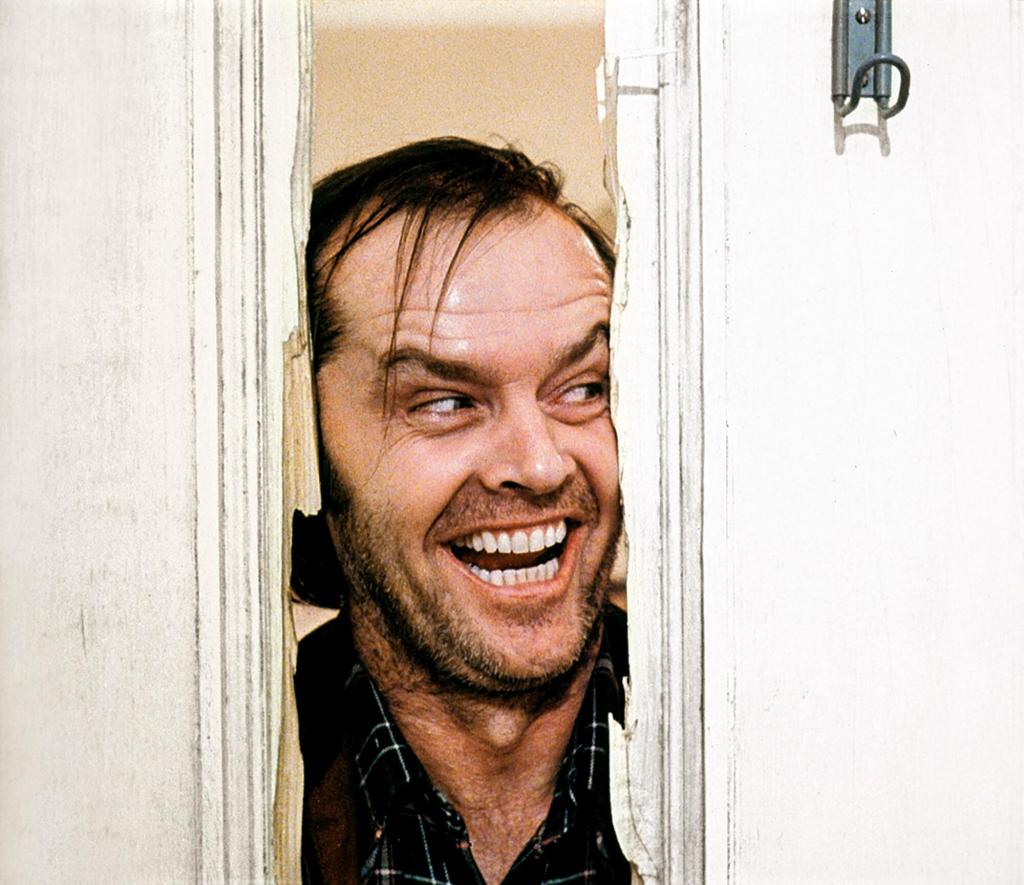
Of course, each genre has its defining conventions and therefore appeals to all kinds of audiences. In his chapter on Genre Films in Engaging Cinema, Bill Nichols explains that each genre’s “world” has distinct characteristics that activate different emotions while addressing various conflicts. For instance, a horror film is traditionally set in a universe “in which dangerous figures or spirits” menace a vulnerable protagonist. The conflict addressed by horror films is usually one of “irrational or intangible threats versus our ability to confront them (Nichols 250). Considering this, audiences who are interested in the horror genre seek emotions such as dread, fear, disgust, and surprise. Ultimately, this combination of world, conflict, and targeted emotions creates an effective formula that guarantees that audiences will get what they are interested in.
One way to view genre film’s success is also that they address all kinds of conflicts, both personal and social, that are shared concerns amongst society, but they do so in inventive ways that both allow us to experience a different universe while resolving issues that are familiar to us. After all, many viewers enjoy watching movies to escape from their world and be transported to another universe where things come to a resolution. Consequently, the genres we gravitate towards are not only telling in terms of the issues that preoccupy us individually but also in terms of the matters that concern our society in general.
In order to effectively address these kinds of conflicts and target the desired emotions, filmmakers use genre conventions and manipulate the audience using cinematic apparatus. Indeed, these genre norms can at times draw attention to themselves or be “invisible,” often going entirely unnoticed. However, even an “invisible” technique like continuity editing still inherently manipulates the viewer’s attention because it draws our focus to the story rather than to the editing itself. One example of this is in horror films where filmmakers often use POV shots that limit the viewer’s perspective. This type of shot keeps the dangers off the screen, but the audience is still aware that something evil is looming out of the frame which heightens tension and dread. Apart from the cinematography, editing can also significantly influence our interpretation. One example of this is the long take with deep focus in comparison to fast-paced editing; both allow for viewers drastically different levels of interpretation. The former allows “the camera [to present] a scene without cuts” that focuses on “spatial planes of the scene” thus “preserv[ing] the integrity of [the scene’s] space and time,” whereas the latter exerts full control over space and time “whether it be in the classical Hollywood style of establishment shot, medium shots, close-ups, and shot reverse shots; or in the Soviet style of collision and associational editing” (Man 15).
It is worth noting that filmmakers do not manipulate audiences solely through the different stylistic choices that they make, but rather that this manipulation begins from the moment that the story is established. Indeed, the plot plays an important role in steering us toward certain expectations. When it comes to genre films, plots aim to be based on a certain model:
“The important point in this context is that characters in genre films encounter the same types of problems repeatedly” (Nichols 253).
These problems all relate to different spheres, whether it be of the social or domestic order, of the law of the state or the law of the patriarchy. Comedies, melodramas, and horror films are therefore known to address issues of the domestic order and the law of the patriarchy while westerns, action and gangster films address issues of the social order and law of the state. Although as viewers we may not recognize these categories, they still influence and subconsciously dictate our interpretation of a film.
Although filmmakers can use film language and narrative techniques to manipulate audiences, spectatorship theory has also shown that viewers each interpret the same films differently because of their cultural baggage. Part of this cultural baggage is the expectations that film consumers have: an experienced horror film viewer might expect something different from a certain horror movie than someone who has never seen one before. Indeed, over the past few years, spectatorship theory has moved more toward a transmission model where not all information is believed to be within the film, but rather viewers bring their own interpretation. In his text Spectator, audience and response, Patrick Philips argues that schema theory may explain why it is that audiences have these expectations:
When we are confronted by a new experience, we look for familiar patterns that allow us to orient ourselves and make sense of what is in front of us. In the experience of watching a film we automatically look for the schemas we have become accustomed to from our previous experience of film (Nelmes and Philips 127).
Therefore, we tend to store knowledge in slots, and we refer to this knowledge to generate expectations when we are next faced with a similar situation. This is one of the many explanations behind why we have different expectations centered around genre films.
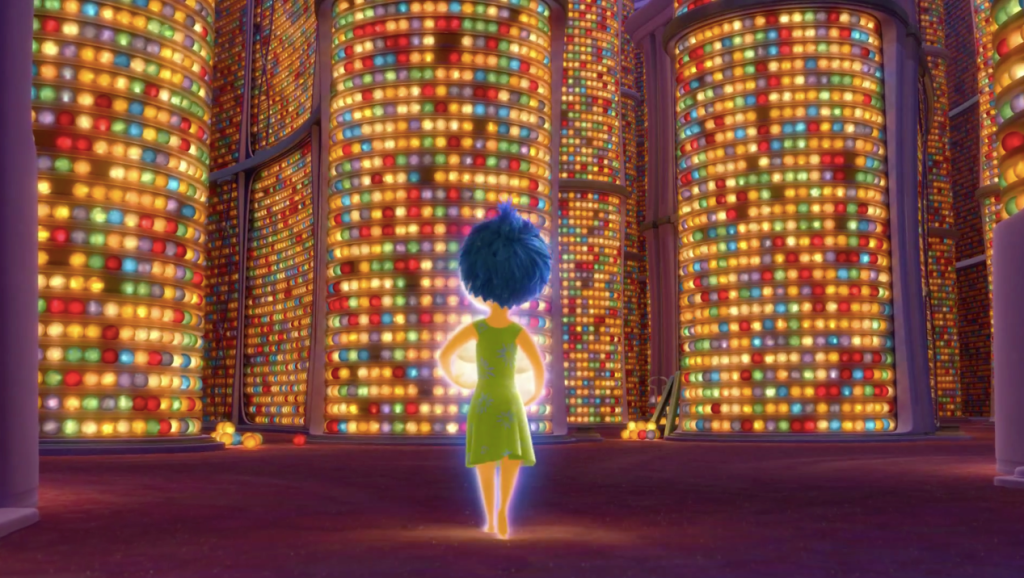
Another explanation that connects spectatorship theory and genre films is the presence of mirror neurons, a neuroscientific concept that applies to aesthetic experiences. In short, “the mirror neuron system (MNS) […] not only activates when we perform a certain action, but also when we see another person performing that same action” (Coëgnarts and Kravanja 95), thus meaning that these neurons present in our premotor cortex and posterior parietal cortex affect how we empathize and relate to protagonists in movies. Indeed, when watching a film passively, our neurons are first stimulated by someone performing an action and they then reflect the motoric activity so that we repeat, in our minds, the action on screen. Ultimately, “this means that there is probably a biological dynamic that supports our understanding of others and the complex exchange of abstract ideas” (Coëgnarts and Kravanja 94), and thus that the observer feels empathy for the observed merely from watching them. Of course, this empathy is heightened through other cinematic conventions that make viewers and audiences root for (or in certain special cases, against) the protagonist.
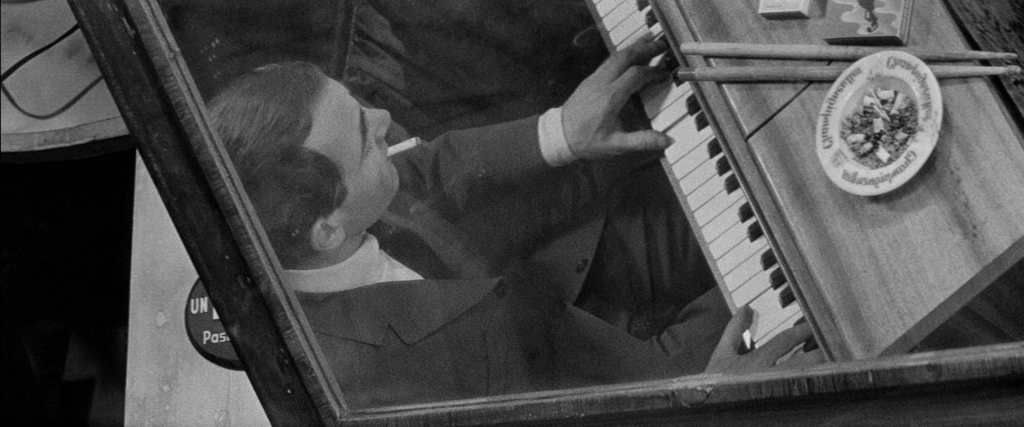
Considering how films tend to return to the same conventions and tropes within their respective genres, the rare cases where filmmakers combine or exaggerate genres tend to disorient audiences. An example of this is François Truffaut’s Shoot the Piano Player which is described as “[a] wild mixture of gangster thriller, slapstick comedy, and bittersweet romance” (Ehrenstein). This combination of genres along with the film’s convoluted plot did not please audiences as much as Truffaut’s other movies at the time of its release, but it is now regarded as an important contribution to the French New Wave, seeing as it broke the rules of narrative and went against what audiences were used to. In one scene where the protagonist is walking in the streets at night with his love interest, audiences may be steered towards believing the film to be a romantic one, however, a few moments later, the two realize they are being followed by two bandits and decide to hide. The disruption does not amount to anything though and instead we return to them walking together. Thus, this back-and-forth between genres makes it increasingly difficult for audience members to identify with the protagonist because they do not see him reproducing the schema they are used to. It leaves them confused and disconnected from the movie.

What we can conclude from Shoot the Piano Player is that films which combine or exaggerate genre tropes make it harder for audiences to have empathy for the characters and challenge them as they cannot refer to previous viewing experiences to anticipate what will come next. Whereas genre films provide comfort and familiarity to audiences, a formula that has been proven to be successful over time, these genre experiments provide new and fresh perspectives on storytelling while allowing for various interpretations that are not dictated by other films.
Works Cited
Abrams, Nathan, et al. Studying Film (Studying the Media). 1st ed., Hodder Education Publishers, 2001, pp. 7-26.
Berry-Flint. “Genre” A Companion to Film Theory, edited by Toby Miller and Robert Stam, Blackwell Publishing, 2004, pp.-25-44.
Coëgnarts, Maarten, and Peter Kravanja. “Embodied Visual Meaning: Image Schemas in Film.” Projections, vol. 6, no. 2, Nov. 2012, pp. 84-101.
Ehrenstein, David. “Shoot the Piano Player.” The Criterion Collection, criterion.com/current/posts/927-shoot-the-piano-player
Man, Glenn. “Apparatus, Genre, and Spectatorship in the Classroom.”«Educational Perspectives, vol. 42, no. 1-2, 2009, pp. 15-23.
Miller, Toby, and Robert Stam. A Companion to Film Theory. Wiley-Blackwell, 2004.
Nelmes, Jill, and Patrick Philipps. “Chapter 5: Spectator, Audience and Response.” Introduction to Film Studies. London, Routledge, 2012, pp. 114–141.
Nichols, Bill. Engaging Cinema: An Introduction to Film Studies. Illustrated, W. W. Norton and Company, 2010.
 SUBTEXT JOURNAL